Sweet Bran Claims
A macro-ingredient that helps cattle Finish Big. A portion of the corn in the typical finishing ration is replaced with a combination of nutrient-dense steep and corn bran. Fed at 20% or more, it increases ADG by promoting better digestive health.
Sweet Bran rations with DRC or HMC increase intake and gain compared to traditional rations
Research has shown that cattle on a ration with Sweet Bran and DRC (dry-rolled corn) or HMC (high-moisture corn) consumed 1–2.5 lbs. more dry matter per day than a traditional ration.
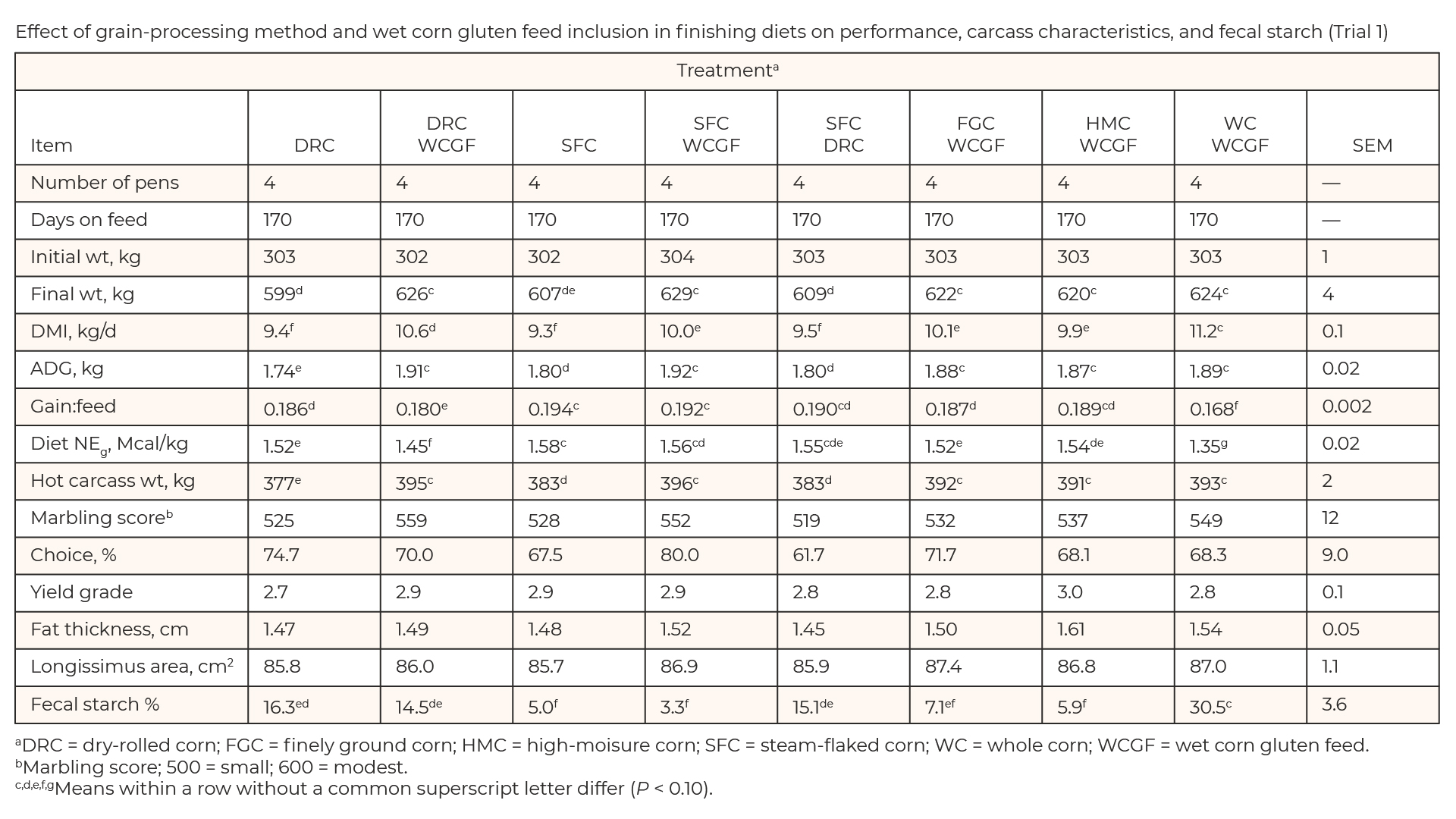
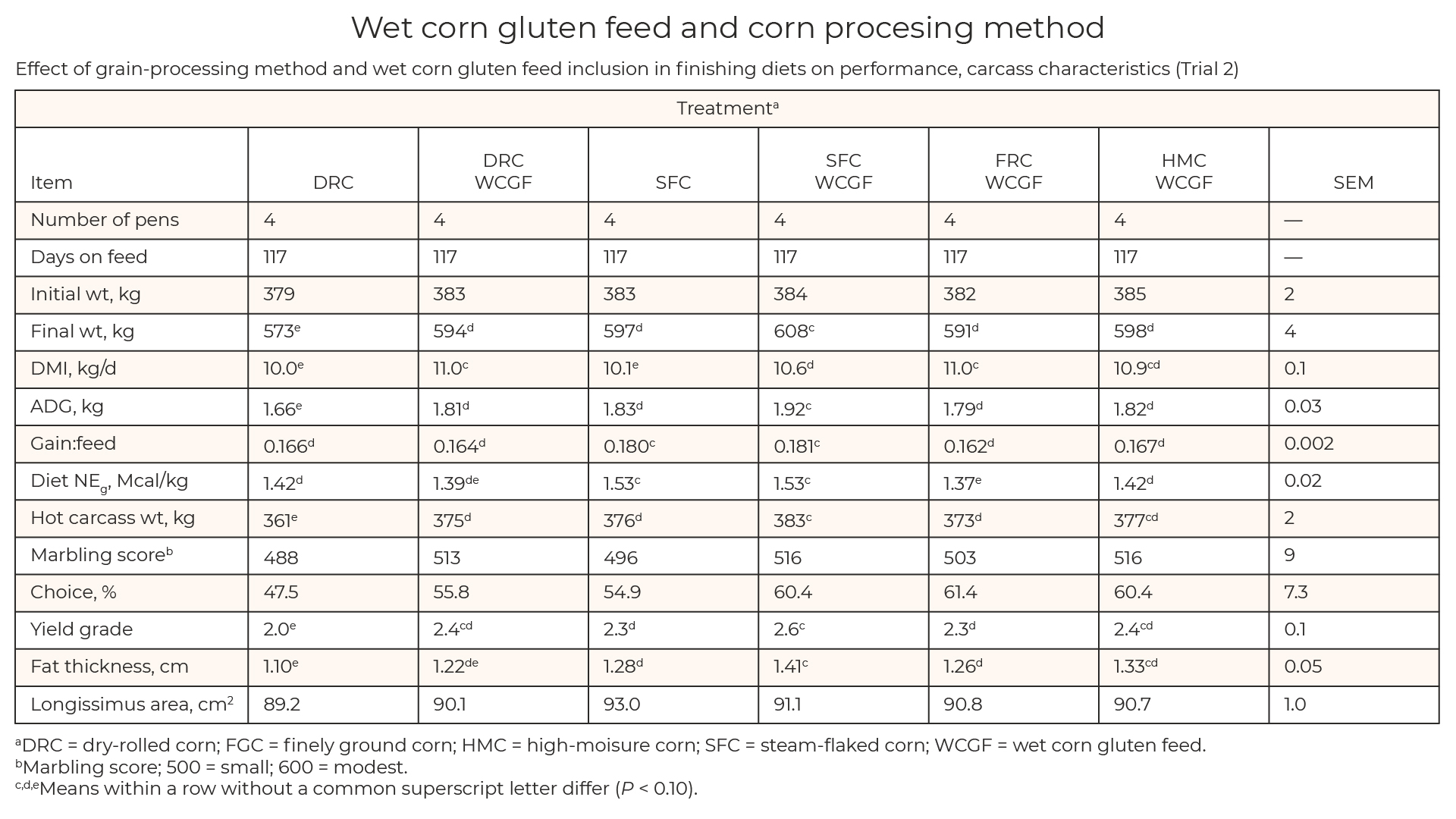
In steam-flaked corn diets, Sweet Bran showed a 5% improvement in DMI and ADG over traditional diets
In dry-rolled/high-moisture corn diets, Sweet Bran showed a 6% improvement in DMI, 8% in ADG, and 2% in F:G
Sweet Bran increases intake and gain compared to rations with commodity WCGF (wet corn gluten feed)
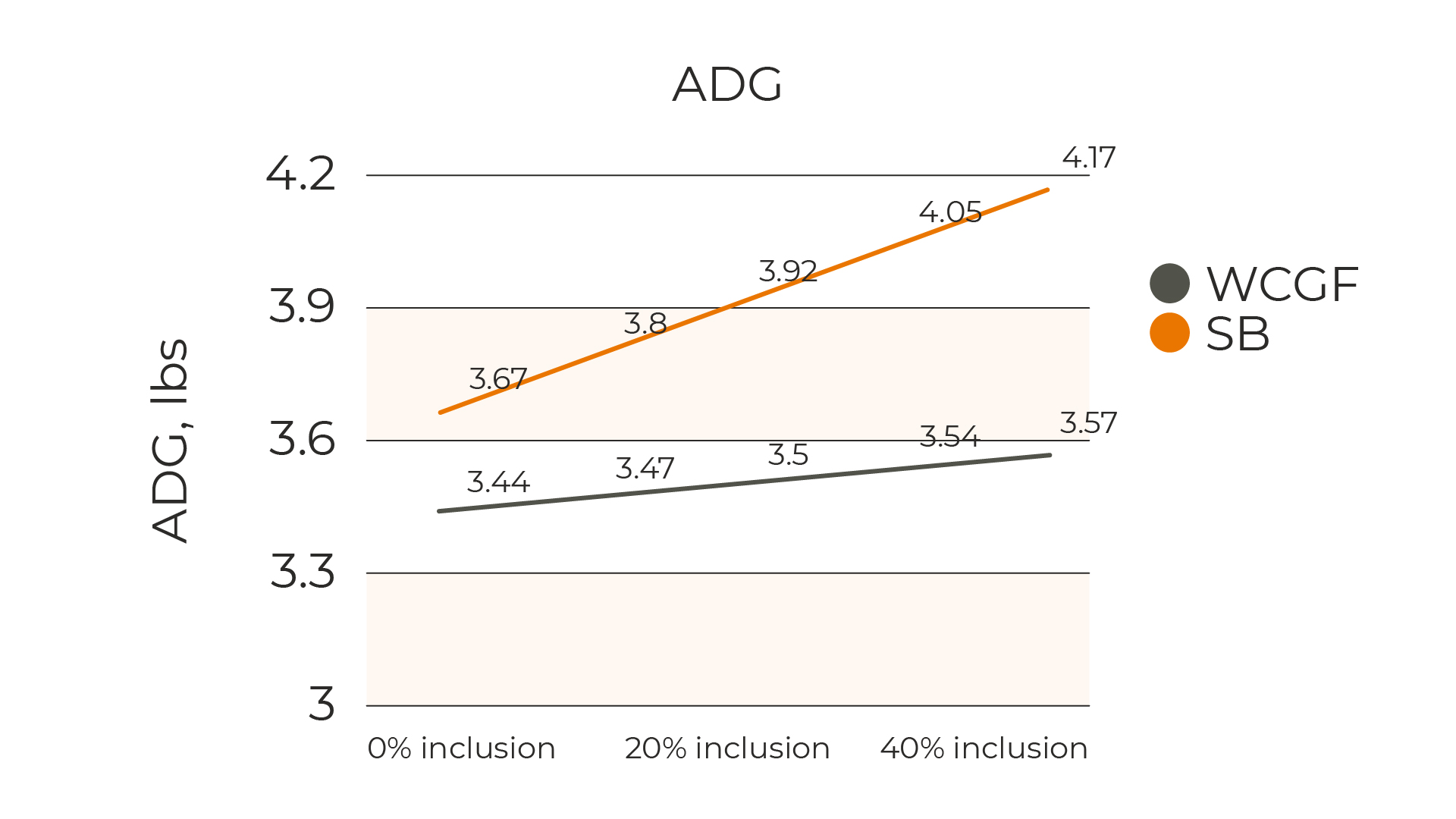
Sweet Bran is different than WCGF. Early published research made this confusing as Sweet Bran and WCGF were used interchangeably. WCGF is the commodity term for by-products that come from wet corn mills. Research studies were conducted to compare Sweet Bran at 20% to 40% inclusion versus commodity WCGF. Sweet Bran resulted in greater intake and gain.
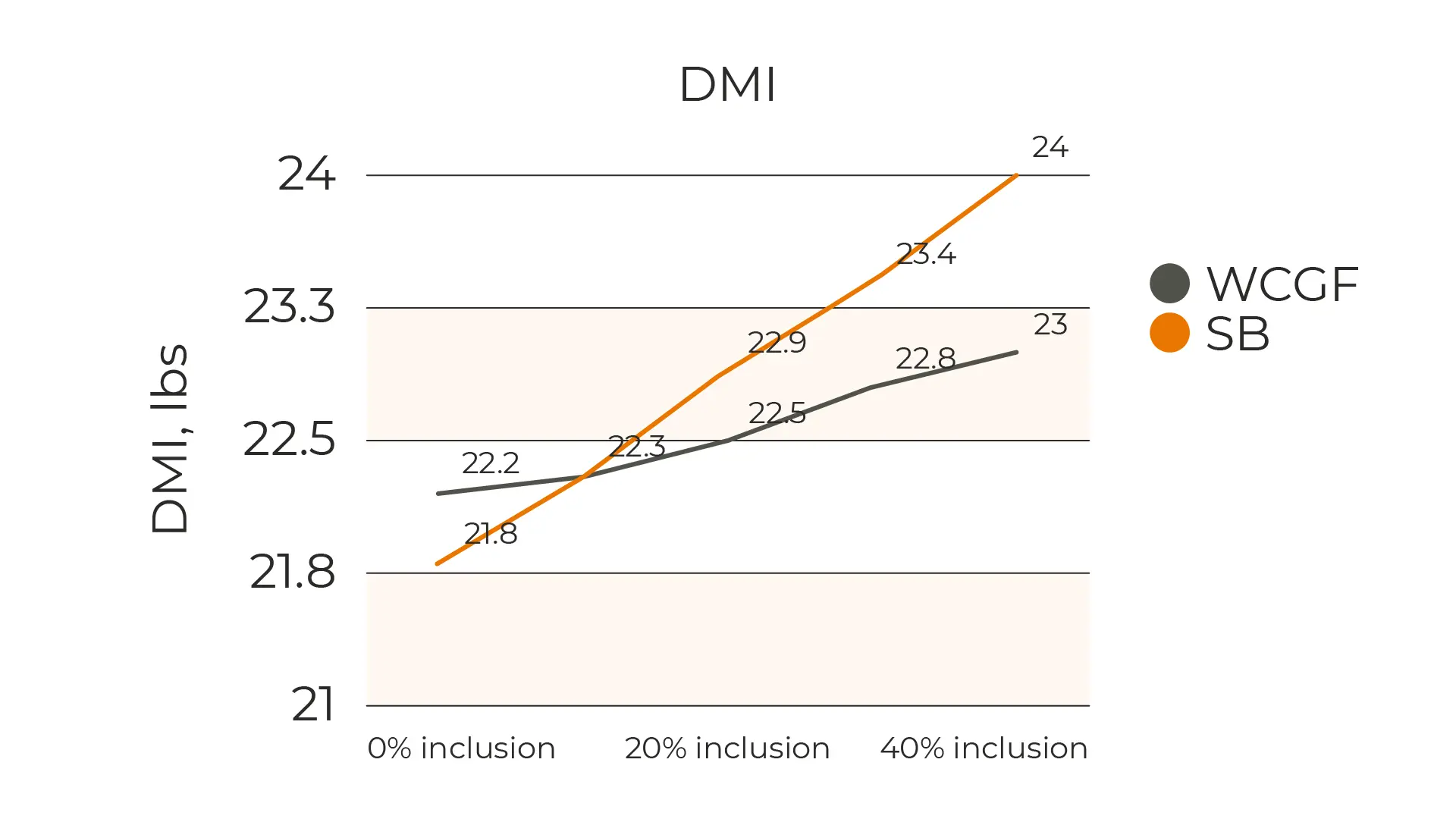
Sweet Bran increases DMI by 2.9% or 0.67 lbs./day compared to WCGF
Sweet Bran increases ADG by 12% or 0.50 lbs./day compared to WCGF
Sweet Bran promotes a healthy rumen microbiome, resulting in improved nutrient utilization
Sweet Bran helps create a balanced rumen pH in the animal by improving the efficiency of the rumen microbiome to convert more of the entire diet to energy and avoids cyclical eating patterns, promoting increased intake throughout the entire feeding period.
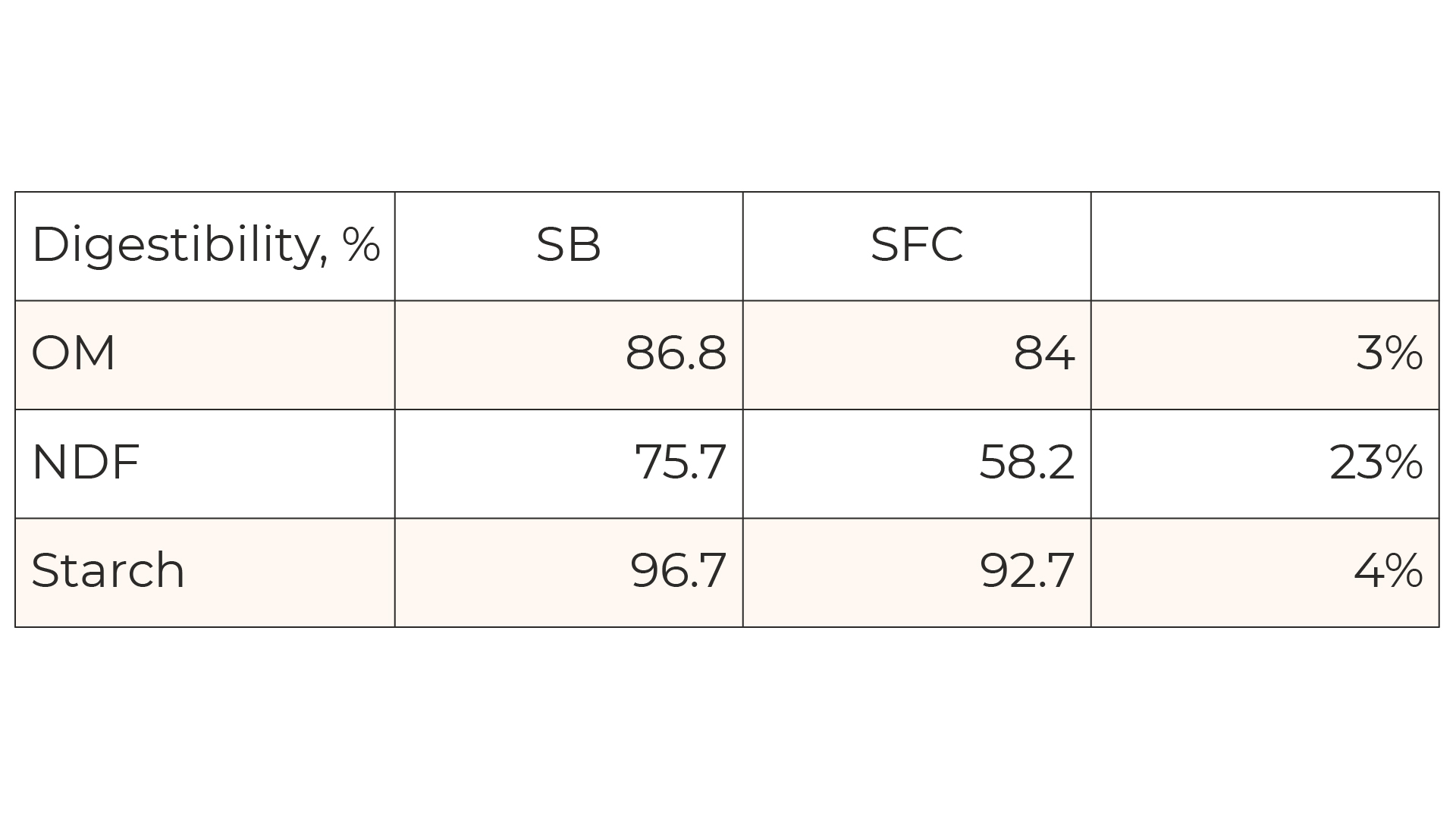
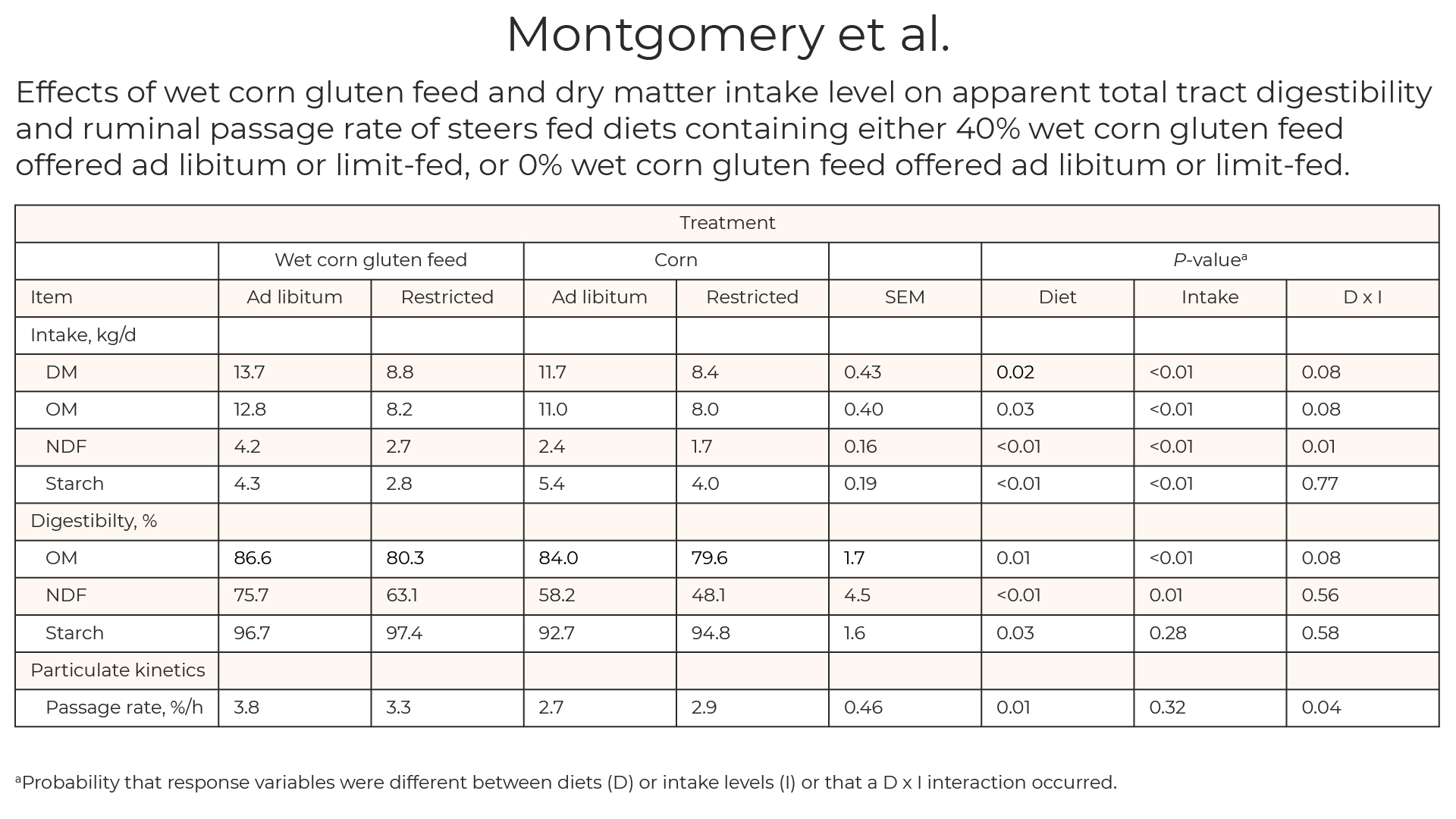
improved energy utilization
Sweet Bran vs. a traditional diet results in a less variable and higher overall rumen pH
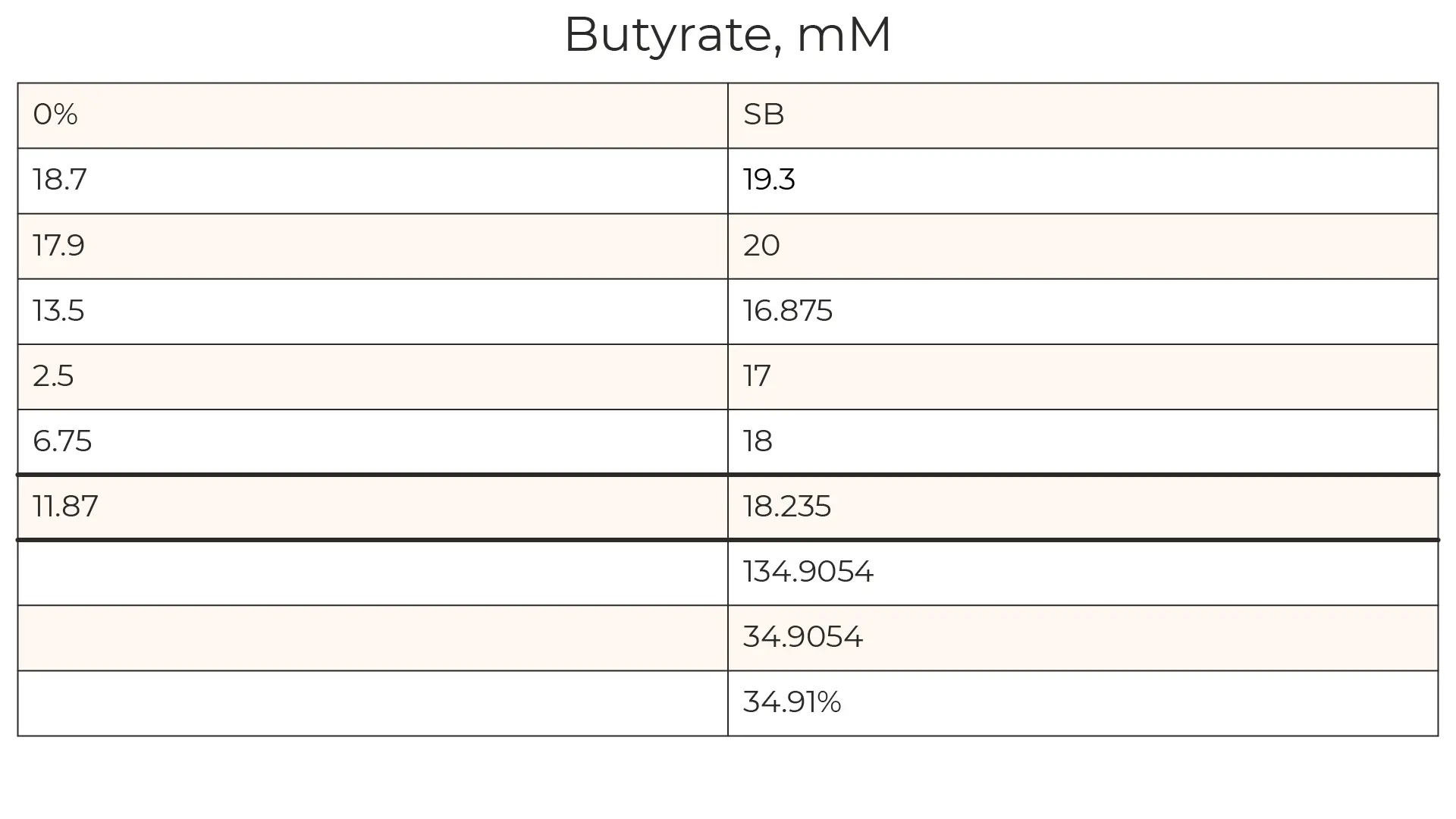
In a healthy, balanced rumen, VFAs aren’t being produced faster than they can be absorbed, which can occur in a traditional diet. Sweet Bran promotes a more stable rumen pH over the feeding period, reducing the chance for acidosis and cyclical feed intake. Sweet Bran also results in greater butyrate production. Butyrate is the main energy source for repair and maintenance of the rumen wall to help with efficient absorption.
Less variable rumen pH
30% increase in butyrate production
Operational Efficiency
Sweet Bran is a consistent, high-inclusion ingredient that improves feed manufacturing
Research and Documentation
-
Peer
Effects of wet corn gluten feed and roughage levels on performance, carcass characteristics, and feeding behavior of feedlot cattle
2007 Texas Tech University

-
Peer
Effects of concentration and composition of wet corn gluten feed in steam-flaked corn-based finishing diets
2004 University of Nebraska-Lincoln
-
Peer
Optimal wet corn gluten and protein sevels in steam-flaked corn-based finishing diets for steer calves
2005 University of Nebraska-Lincoln
-
Peer
Corn-processing method in finishing diets containing wet corn gluten feed
2003 University of Nebraska-Lincoln
-
Peer
The effect of Sweet Bran® on the profitability of finishing cattle in Cattle Town Feeders LTD
2004
-
Peer
Wet corn gluten feed sevels for steam-flaked corn based finishing diets
2003 University of Nebraska-Lincoln
-
Peer
Performance and digestibility characteristics of finishing diets containing distillers grains, composites of corn-processing co-products, or supplemental corn oil
2008 University of Nebraska-Lincoln
-
Peer
Ethanol by-products use for feedlot cattle
2009 University of Nebraska-Lincoln
-
Peer
Effect of feeding combinations of wet distillers grains and wet corn gluten feed to feedlot cattle
2009 University of Nebraska-Lincoln
-
Peer
Utilization of corn co-products in the beef industry
2007 University of Nebraska-Lincoln
-
Peer
Grain processing and by-product interactions—an industry perspective
-
Peer
A review of research on distillers grains and corn gluten
2005 University of Nebraska-Lincoln
-
Peer
Dietary factors affecting volatile fatty acid production in the rumen
1961 Iowa State University
-
Peer
Nutrient absorption and utilization in ruminants
2009 Colorado State University
-
Peer
Need for ruminally degraded nitrogen by finishing cattle fed processed frains
West Texas A&M University
-
Peer
Influence of ruminal degradable intake protein restriction on characteristics of digestion and growth performance of feedlot cattle
2014
-
Peer
Optimal wet corn gluten and protein levels in steam-flaked corn-based finishing diets for steer calves
2005 University of Nebraska-Lincoln
-
Peer
Effects of corn processing method and protein concentration in finishing diets containing wet corn gluten feed on cattle performance
2006 University of Nebraska-Lincoln
-
Peer
Effects of Virginiamycin and Monensin Plus Tylosin on Ruminal Protein Metabolism in Steers Fed Corn-Based Finishing Diets With or Without Wet Corn Gluten Feed
2002 Kansas State University
-
Peer
Ruminal and postruminal starch digestion by cattle
University of Iowa
-
Peer
Site of starch digestion: impact on energetic efficiency and glucose metabolism in beef and dairy cattle
University of Kentucky
-
Peer
Interaction of grain co-products with grain processing: associative effects and management.
Texas Tech University
-
Peer
Corn grain-processing and digestion
-
Peer
Starch digestion and glucose metabolism in the ruminant: a review
2003
-
Peer
Feed intake in feedlot cattle
-
Peer
Evaluating the effects of diet energy density on Hereford steer performance with differing genetic potential for dry matter intake
2017 Iowa State University
-
Peer
Formulation of ruminant diets using by-product ingredients on the basis of fermentable and nonstructural carbohydrates
2014 Cornell University
-
Peer
Bunk management
South Dakota State University
-
Peer
Iowa Beef Center feed bunk management
2015 Iowa State University
-
Peer
The impact of feed intake and feeding behaviour of cattle on feedlot and feedbunk management
Agriculture and Agri-Food Canada
-
Peer
Nutritionally related disorders affecting feedlot cattle
2002 Texas Tech University
-
Peer
Acidosis in cattle: a review
1998 Oklahoma State University
-
Peer
Acidosis. Beef Cattle Handbook.
University of Nebraska-Lincoln
-
Peer
The effects of dietary adaptation programs on feedlot cattle performance and evaluation of ruminal monitoring devices in an acidosis challenge
2011 Oklahoma State University
-
Peer
Acidosis, rate of starch digestion and intake
1986 University of Nebraska-Lincoln
-
Peer
Effects of imposed feed intake variation on acidosis and performance of finishing steers
1999 University of Nebraska-Lincoln
-
Peer
Effect of rapid or gradual grain adaptation on subacute acidosis and feed intake by feedlot cattle
2005 University of Saskatchewan
-
Peer
Feeding wet corn gluten feed to reduce subacute acidosis in cattle
1995 University of Nebraska-Lincoln
-
Peer
Corn-processing method in finishing diets containing wet corn gluten feed
2003 University of Nebraska-Lincoln
-
Peer
Meta-analysis of UNL feedlot trials replacing corn with WCGF
2008 University of Nebraska-Lincoln
-
Peer
Effects of wet corn gluten feed and intake level on diet digestibility and ruminal passage rate in steers
2004 Kansas State University
-
Peer
Effects of corn processing and dietary wet corn gluten feed inclusion on performance and digestion of newly received growing cattle
2014 Kansas State University